compare
Where they overlap and where they differ
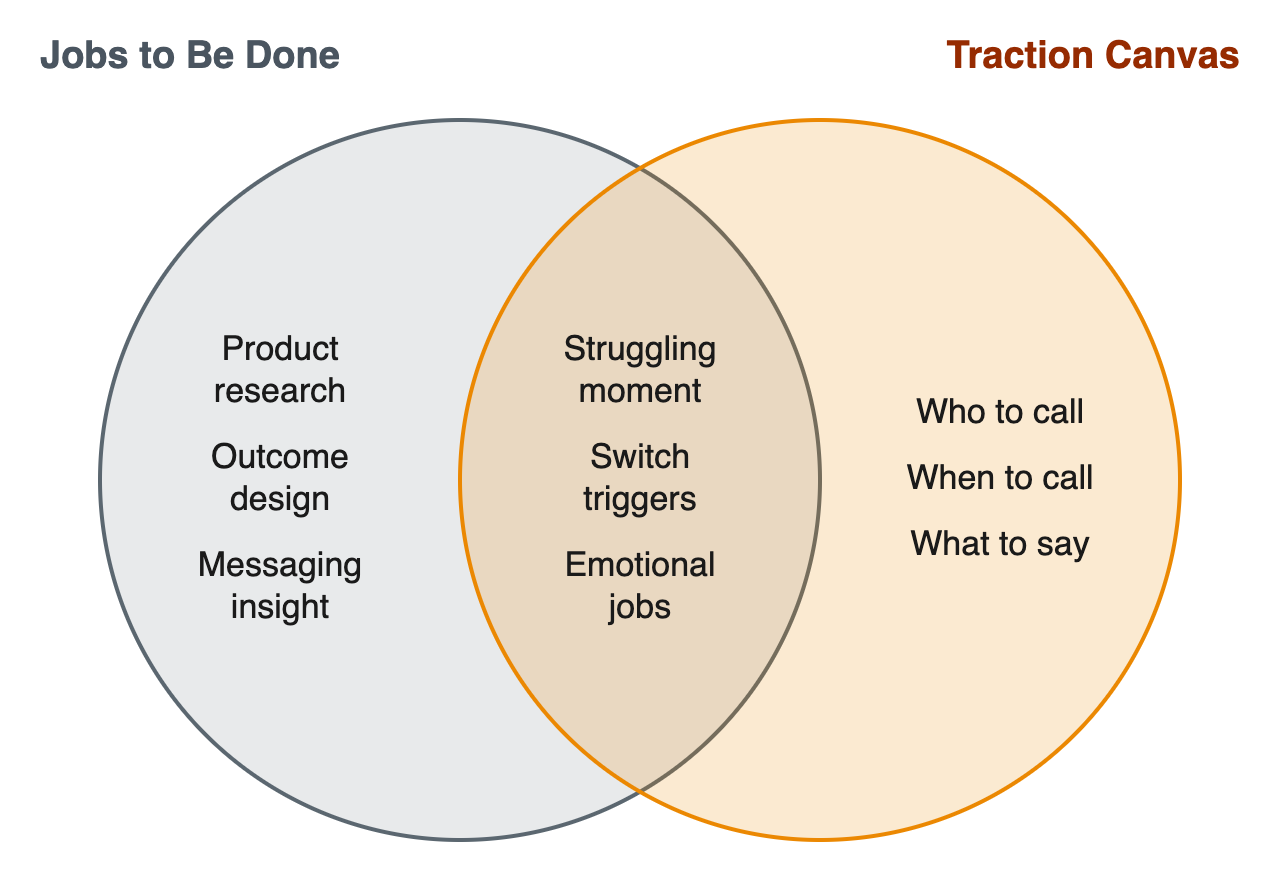 Left: covered by Jobs to Be Done only. Middle: covered by both. Right: covered by the Traction Canvas only.
Box by box
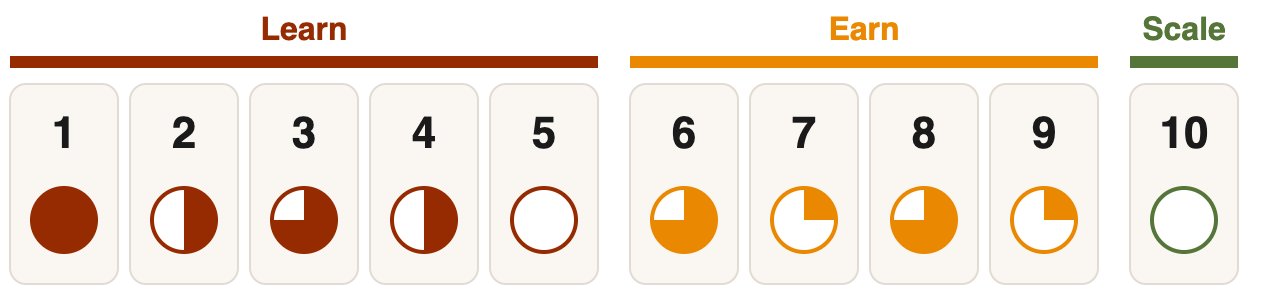 How much Jobs to Be Done covers each Traction Canvas box. Full circle: a core focus. Empty: not covered. This is our own assessment; see all models compared.
The short answer: Jobs to Be Done explains why customers switch to a new product. The Traction Canvas uses the same insight to decide when and how to sell, especially through Trigger Events.
What Jobs to Be Done does well
Jobs to Be Done holds that customers “hire” a product to make progress in a particular situation. Clayton Christensen popularized it in Competing Against Luck, Tony Ulwick built it into Outcome-Driven Innovation, and Bob Moesta’s switch interviews map the forces that push people to change. • It explains buying in terms of progress, not demographics.• It recognizes emotional and social jobs as well as functional ones.
• Its switch timeline shows the moment a buyer starts looking.
How Jobs to Be Done maps to the Traction Canvas
The Traction Canvas has ten boxes in three zones, completed in order: Learn (Boxes 1 to 5), Earn (Boxes 6 to 9) and Scale (Box 10). Here is how Jobs to Be Done lines up with it.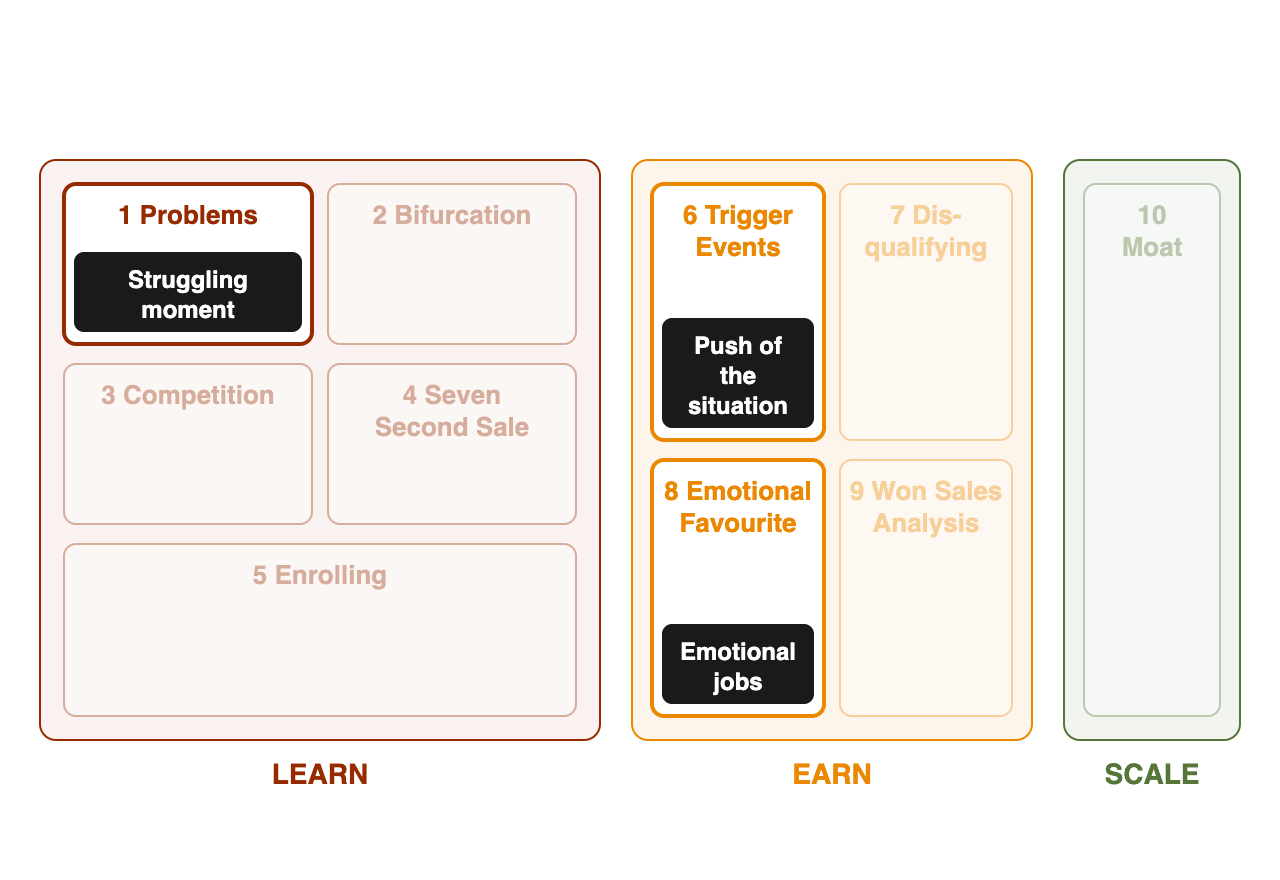 Where Jobs to Be Done lands on the Traction Canvas. Faded boxes are not covered. The table below has the details.
The struggling moment — Traction Canvas: Box 1: Problems / Learn zone. How it connects: Problems finds pain big enough that people act now.
The push of the situation — Traction Canvas: Box 6: Trigger Events / Earn zone. How it connects: Trigger Events put you in front of buyers at the moment they are most likely to switch.
Emotional and social jobs — Traction Canvas: Box 8: Emotional Favourite / Earn zone. How it connects: Emotional Favourite makes you the vendor buyers prefer and trust.
The gap Jobs to Be Done leaves
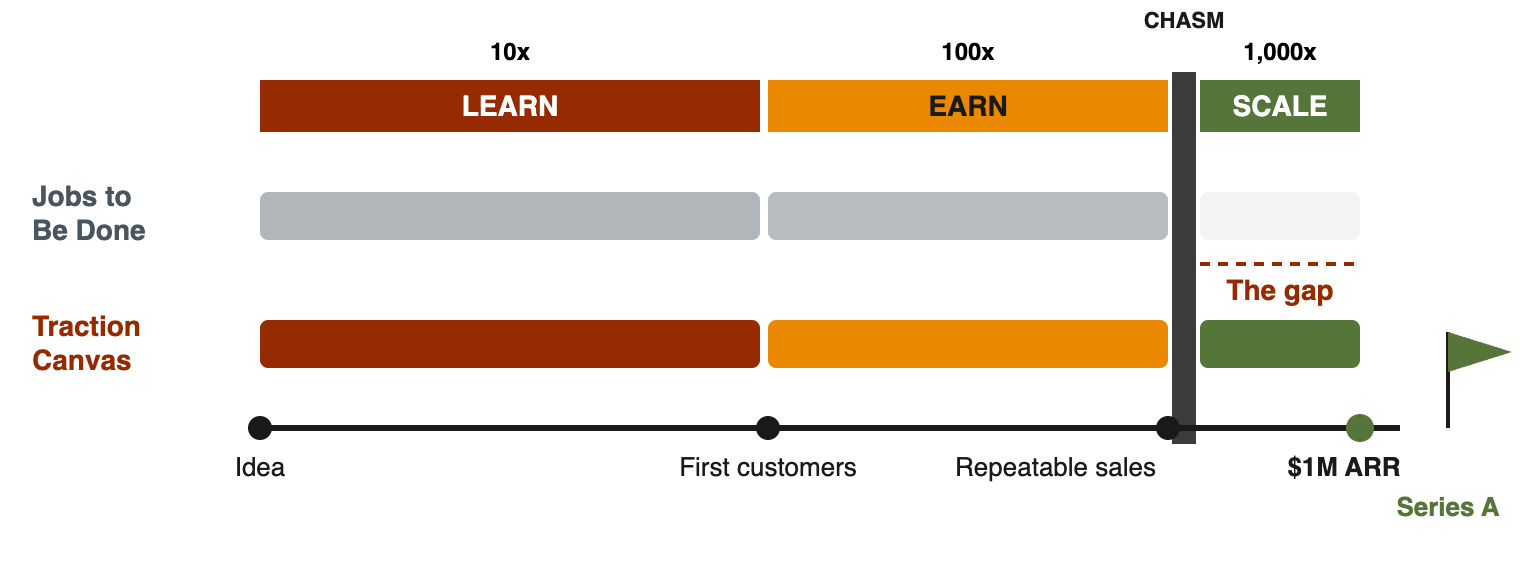 How far each canvas takes a founder on the road to $1M in ARR and a Series A. Bar strength shows how much of each zone is covered, using the box-by-box ratings above.
Jobs to Be Done is a research lens rather than a sales process. It tells you why people buy, and the Traction Canvas turns that into who to call, when, and what to say.