compare
Where they overlap and where they differ
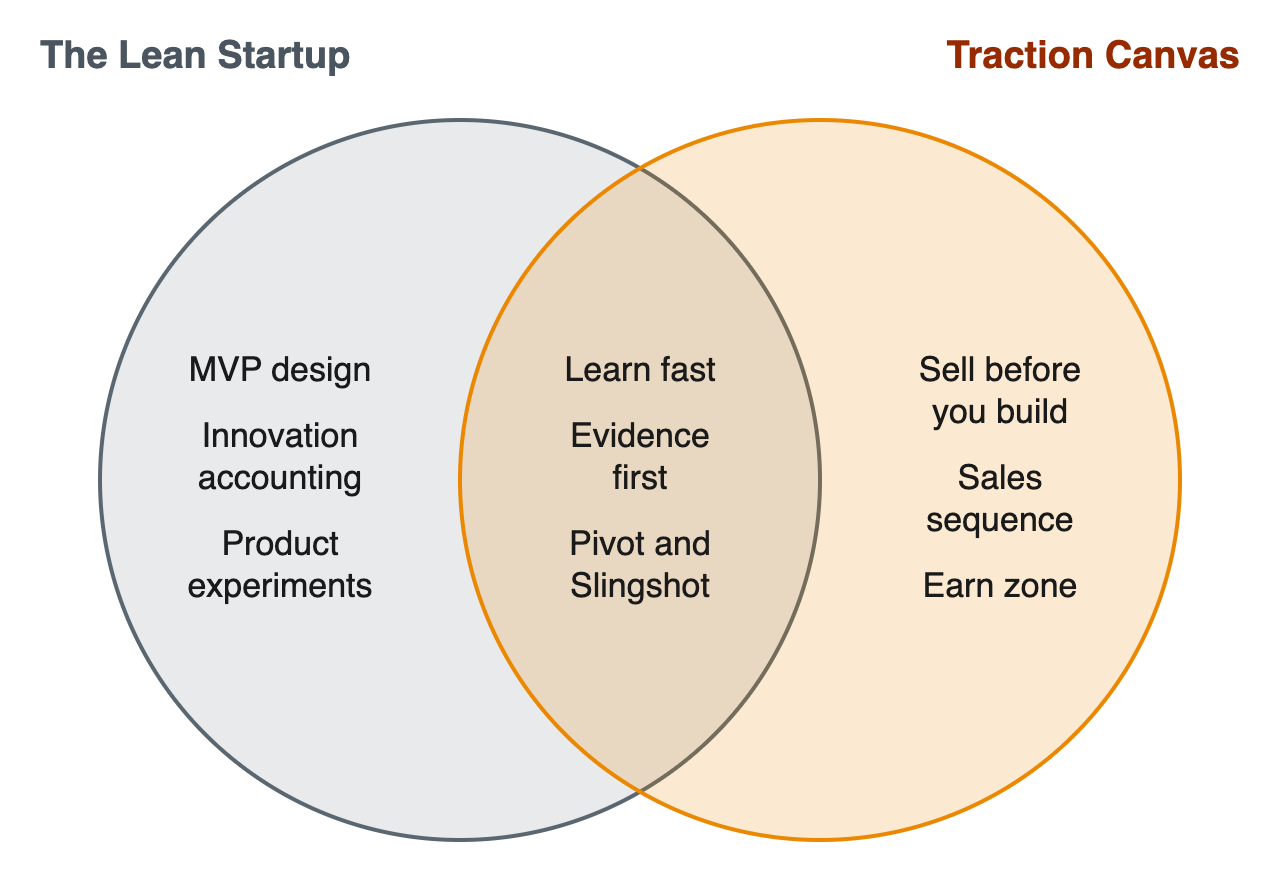 Left: covered by the Lean Startup only. Middle: covered by both. Right: covered by the Traction Canvas only.
Box by box
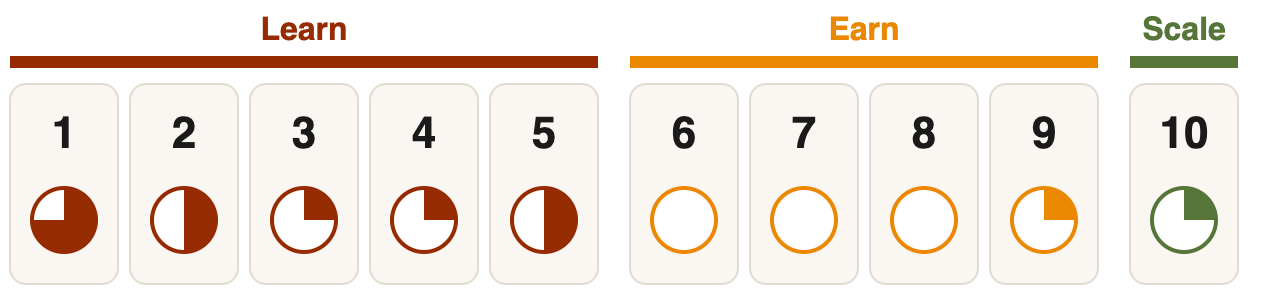 How much the Lean Startup covers each Traction Canvas box. Full circle: a core focus. Empty: not covered. This is our own assessment; see all models compared.
The short answer: The Lean Startup’s Build-Measure-Learn loop is how founders learn fast. The Traction Canvas applies that loop to selling: learn before you earn, and go back a box or two when the evidence says so.
What The Lean Startup does well
Eric Ries’s 2011 book made the minimum viable product, validated learning and the pivot part of everyday startup language. Its engine is the Build-Measure-Learn loop: build the smallest thing that tests an idea, measure what happens, and learn from the result. • It made fast, cheap experiments the norm.• It gave founders permission to pivot based on evidence.
• It focuses on learning rather than vanity metrics.
How The Lean Startup maps to the Traction Canvas
The Traction Canvas has ten boxes in three zones, completed in order: Learn (Boxes 1 to 5), Earn (Boxes 6 to 9) and Scale (Box 10). Here is how The Lean Startup lines up with it.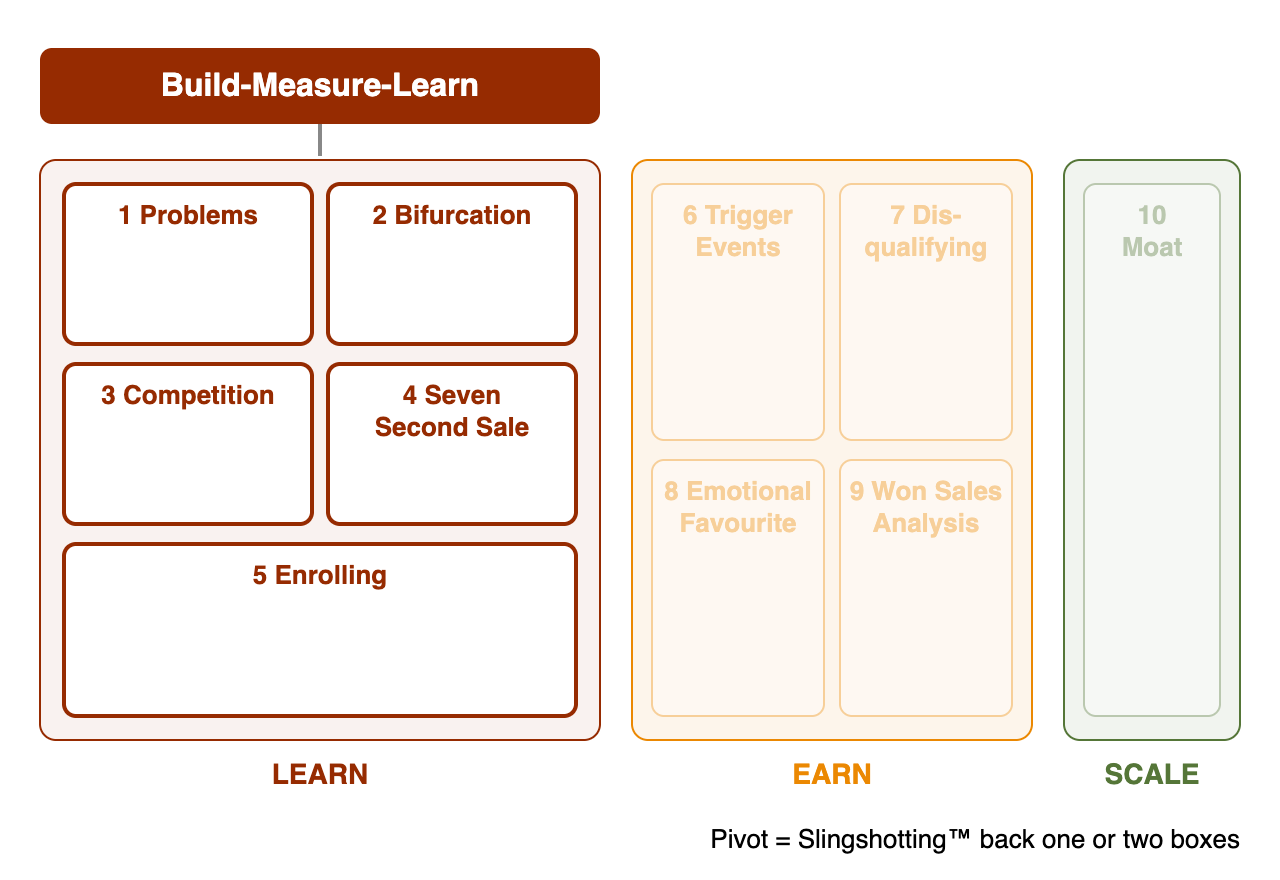 Where the Lean Startup lands on the Traction Canvas. Faded boxes are not covered. The table below has the details.
Build-Measure-Learn — Traction Canvas: Box 1: Problems / Box 2: Bifurcation / Box 3: Competition / Box 4: Seven Second Sale / Box 5: Enrolling / Learn zone. How it connects: The Learn zone is the loop applied to finding and reaching buyers.
Pivot — Traction Canvas: Across boxes. How it connects: Slingshotting™: going back one or two boxes to move forward faster.
The gap The Lean Startup leaves
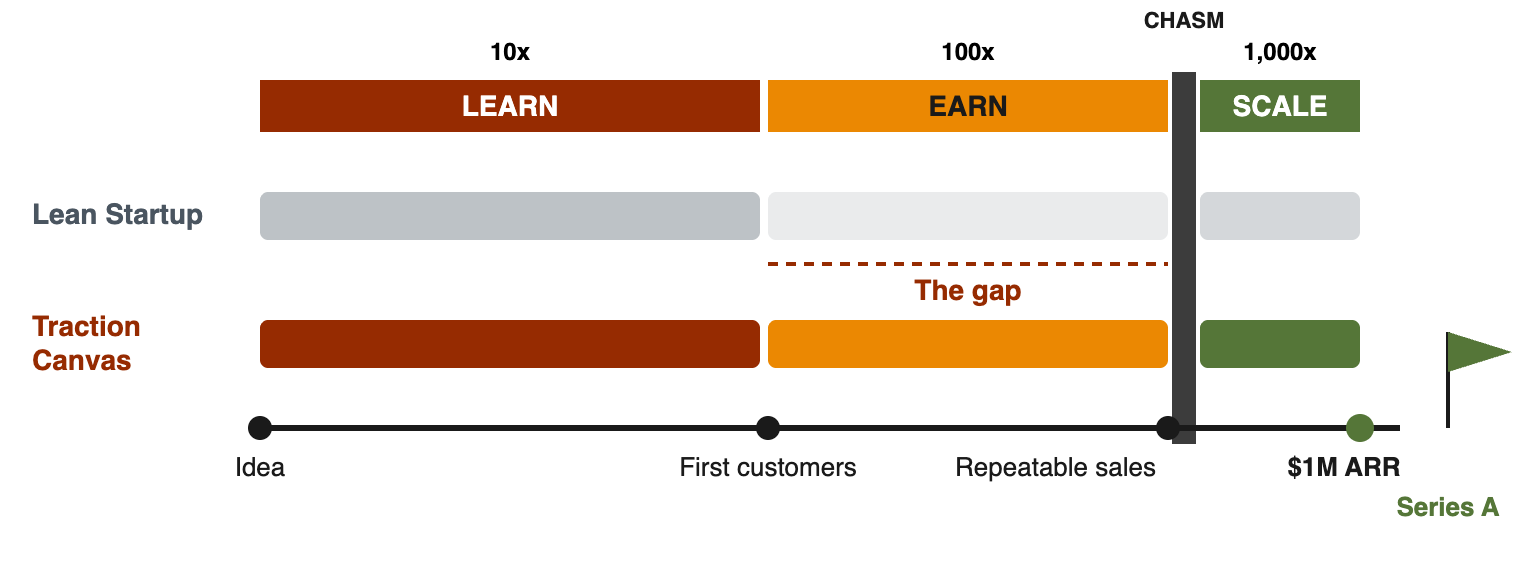 How far each canvas takes a founder on the road to $1M in ARR and a Series A. Bar strength shows how much of each zone is covered, using the box-by-box ratings above.
Build-Measure-Learn starts with building. The Traction Canvas starts with selling: Box 5, Enrolling, gets you meetings with your ideal customers before you build. And the Lean Startup doesn’t give founders a sales sequence, which the Earn boxes provide.