compare
Where they overlap and where they differ
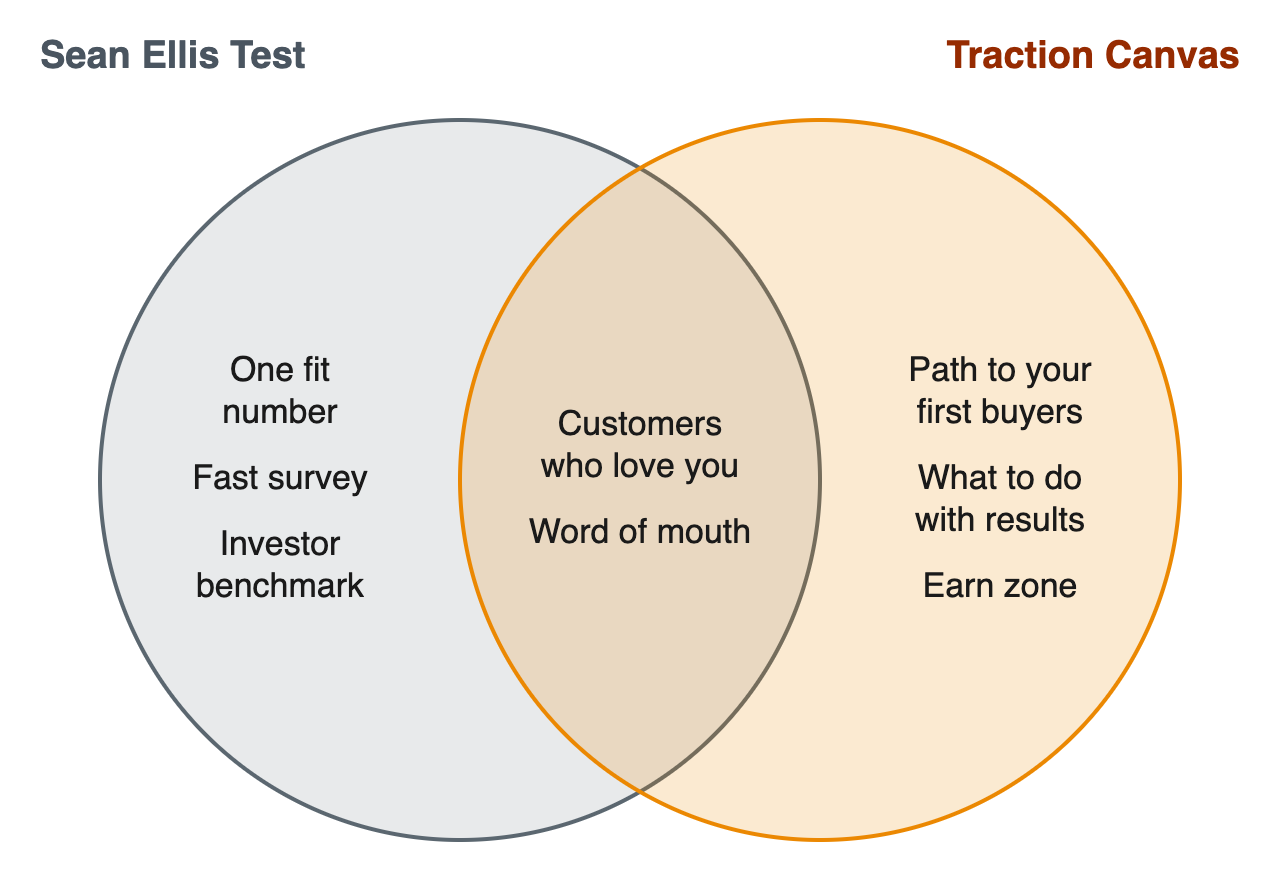 Left: covered by Sean Ellis Test only. Middle: covered by both. Right: covered by the Traction Canvas only.
Box by box
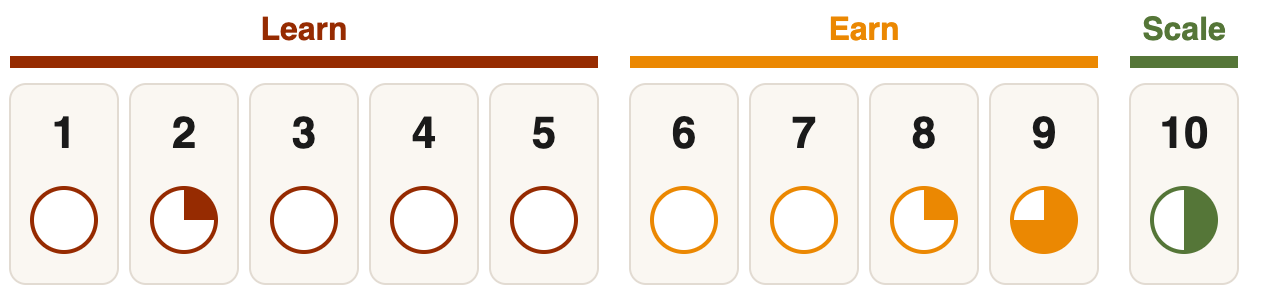 How much the Sean Ellis Test covers each Traction Canvas box. Full circle: a core focus. Empty: not covered. This is our own assessment; see all models compared.
The short answer: The Sean Ellis test measures whether you have product-market fit. The Traction Canvas is the path to getting enough customers to measure, and the customers who pass the test fuel your Marketing Moat.
What The Sean Ellis Test does well
Sean Ellis’s survey asks customers how they would feel if they could no longer use your product. If 40% or more say “very disappointed,” you likely have product-market fit. Ellis also coined the term growth hacking. • It is simple, fast and cheap to run.• It gives a clear benchmark instead of a feeling.
• It identifies your most passionate customers.
How The Sean Ellis Test maps to the Traction Canvas
The Traction Canvas has ten boxes in three zones, completed in order: Learn (Boxes 1 to 5), Earn (Boxes 6 to 9) and Scale (Box 10). Here is how The Sean Ellis Test lines up with it.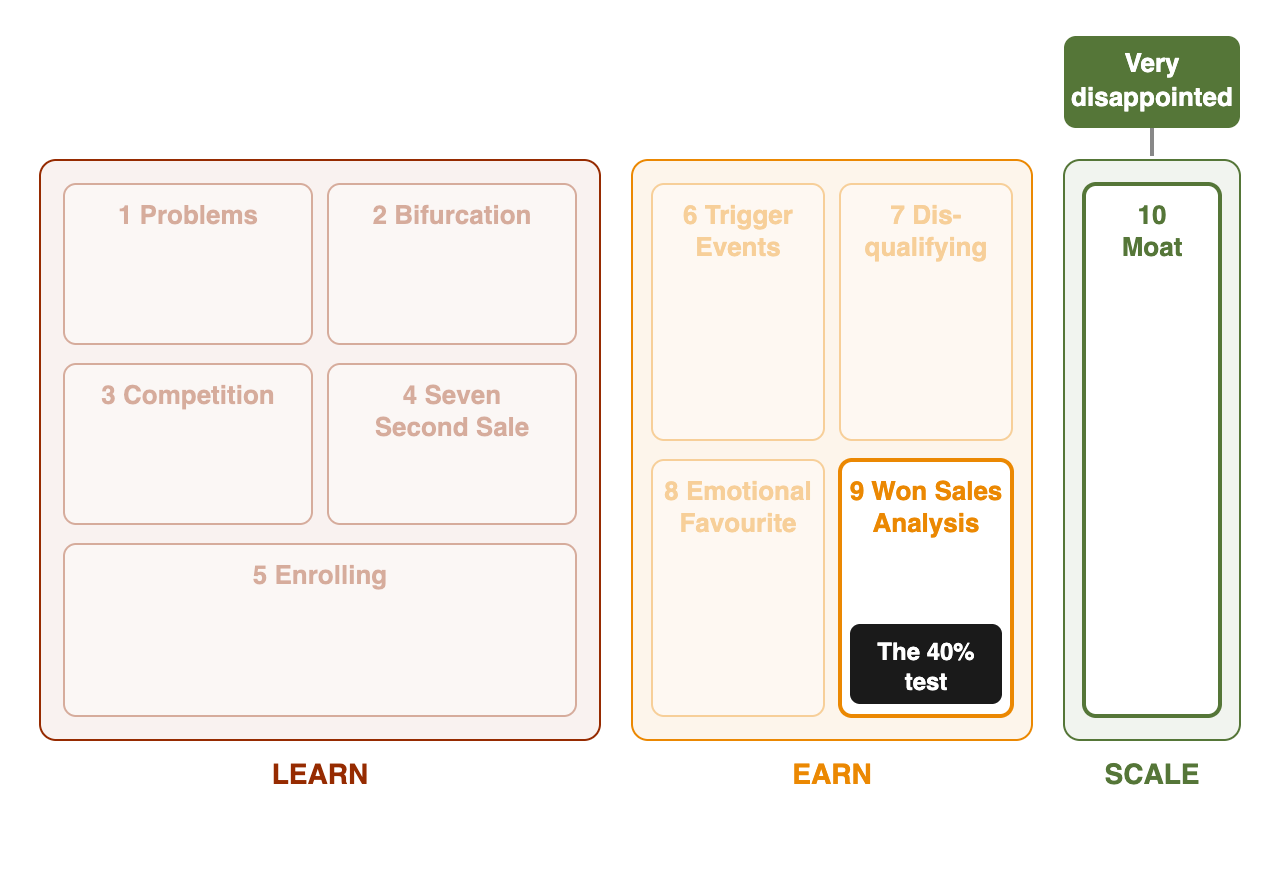 Where the Sean Ellis Test lands on the Traction Canvas. Faded boxes are not covered. The table below has the details.
The 40% test — Traction Canvas: Box 9: Won Sales Analysis / Earn zone. How it connects: Won Sales Analysis shows who your best customers are and why they chose you.
Very disappointed customers — Traction Canvas: Box 10: Marketing Moat / Scale zone. How it connects: These customers are your word-of-mouth engine, the source of your Marketing Moat.
The gap The Sean Ellis Test leaves
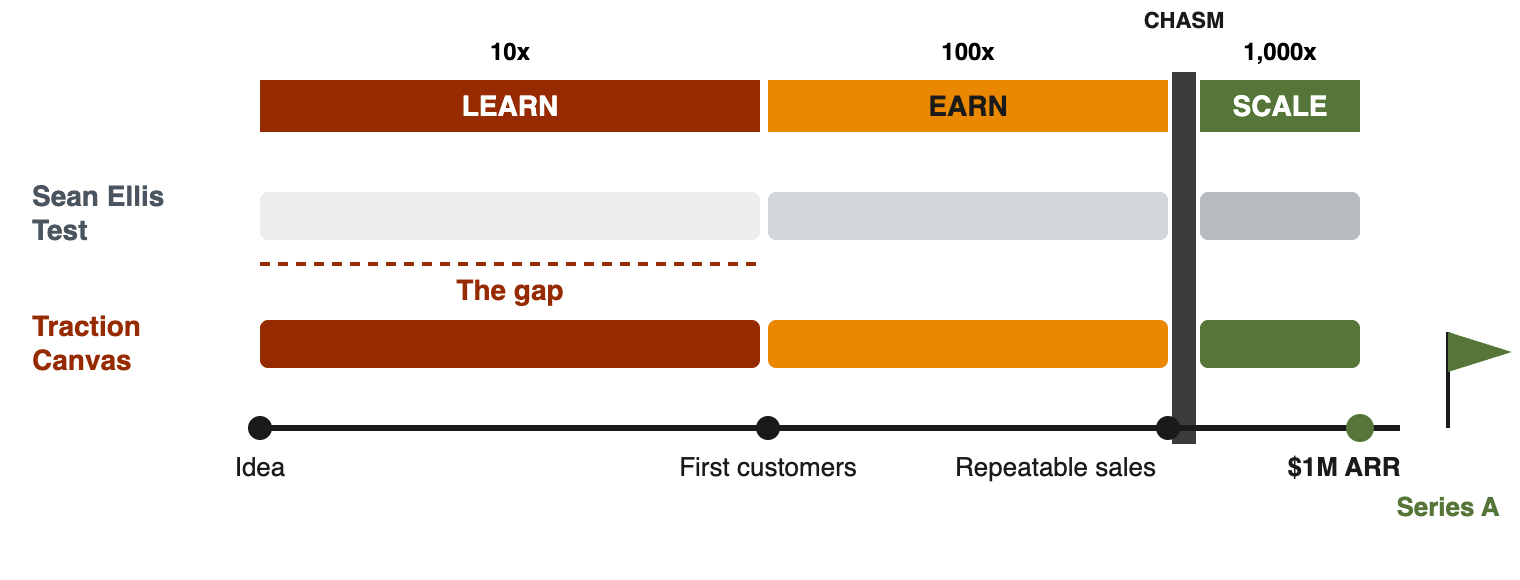 How far each canvas takes a founder on the road to $1M in ARR and a Series A. Bar strength shows how much of each zone is covered, using the box-by-box ratings above.
The test is a checkpoint, not a journey. You need enough customers to survey before it means much, and early-stage B2B founders often don’t have them yet. The Traction Canvas is how you get there.